Blog / 5 October 2026
It starts with flour and water: how Sourdough Diary began
In January of 2026, I decided to make a sourdough starter. Had I briefly tried that a year prior to that? Yeah, potentially, but the lack of success made me want to try again. Also, January, great timing for failure, because I was not depressed already from the lack of sunlight, UV exposure and post-holiday blues. It sort of worked after a few weeks, which felt promising enough, so naturally I tried baking with it.
That in fact did not work.
I tried again, with roughly the same result, and then again after that. I kept producing flat pancakes that would not rise for the life of me. This continued for an embarrassing number of loaves, each one giving me just enough hope to keep going and just enough disappointment to make me question why I had started in the first place.
None of my friends baked sourdough, so there was nobody to complain to, let alone anyone I could ask whether what I was doing was even remotely correct. I did what most people do in that situation: I read what felt like the entire internet, blogs, cookbooks, you name it, watched hours of YouTube, and collected a growing number of completely contradictory opinions about flour, temperature, hydration and fermentation. Because, as it turns out, once you actually manage to bake a decent loaf, you feel like you know it all and ONLY you have the answers to everything, and anyone who says differently is blatantly lying. Heck, there are even recipes that call for a LOT of olive oil! (Not saying it's inherently wrong, I just never used it and I am producing great loaves.)
Two months of me and my jars sitting in silence
At some point, I stopped trying to bake altogether, since I was wasting enough flour already, and decided that the starter itself was clearly the problem I needed to solve first.
For about two months, I experimented with different feeding ratios, different flours and different schedules (once a day, twice a day, let it sit for 48h etc). At one point I had five jars in the fridge at the same time, which seemed perfectly reasonable by then.
My original starters were called Starter A and Starter B, because I was approaching this whole experiment very science-y. B started to constantly outperform A so it graduated to being called “Baby” vs “A-hole”. I was getting really frustrated with one of them. Needless to say, both Baby and A**** did not yield great bread and were actually the culprits of my flat loaves.
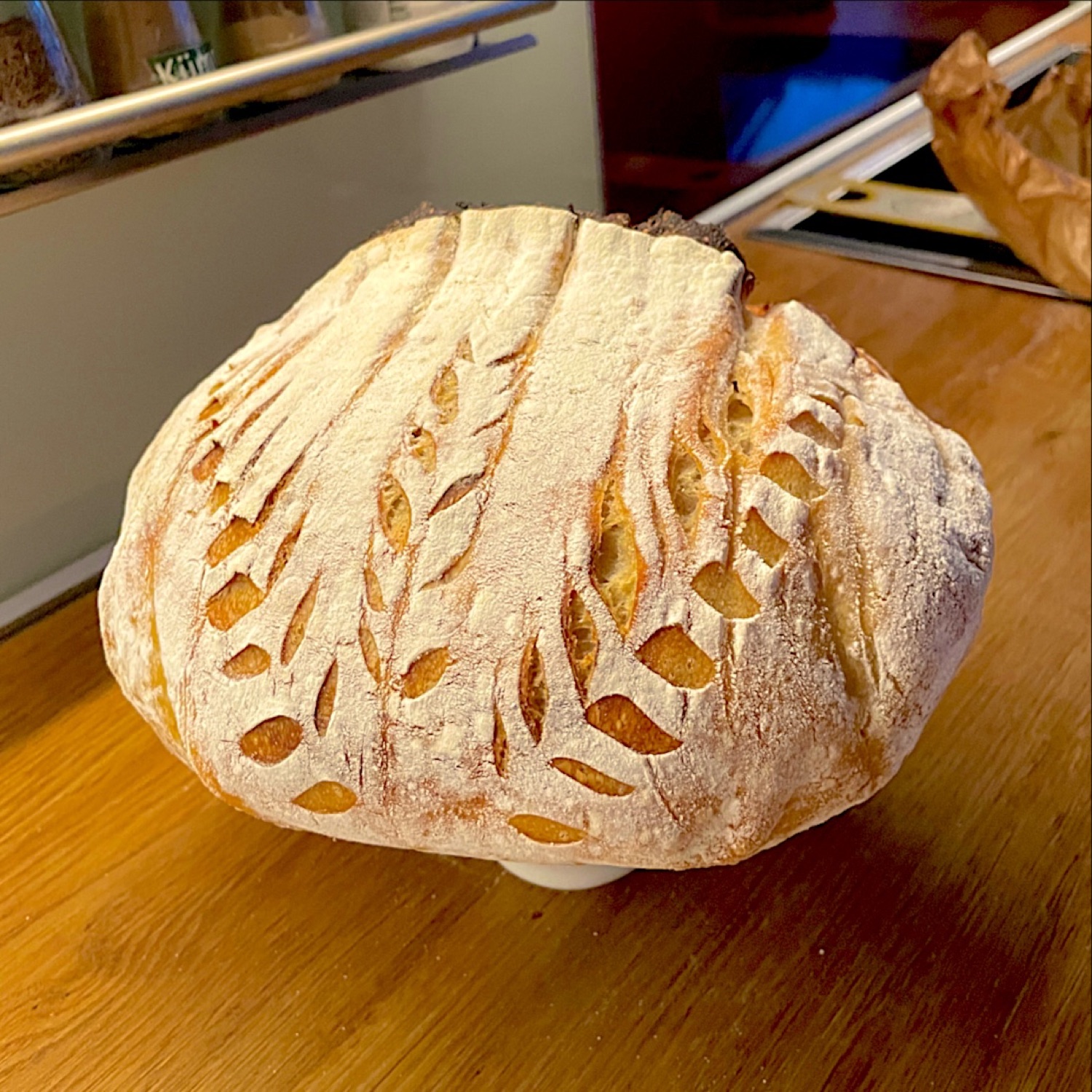
By March, I finally felt brave enough to try another loaf. By then my new starter, a rye Queen called Breadniss, started to consistently rise and fall within a time window that was deemed appropriate by most bread blogs I read online. RIP. She was a good one. Her weaker sister, Starvella, on the other hand, carried the burden of her ancestry and always seemed to fall short of expectations. She got booted soon after. My setup was not perfect, but it sort of worked, and after everything that had come before, “sort of worked” felt very close to winning the lottery. I now made edible sourdough bread. All. By. My. Freaking. Self.
Nobody warned me
What nobody really tells you at the beginning is just how many small details go into making sourdough. Starter strength, feeding ratios, temperature, fermentation, hydration, folding, shaping, proofing and timing all matter, and none of them exist in isolation.
That was probably the part I found most frustrating. There was rarely one clear answer to anything because the answer was usually “it depends”, followed by another five variables I had not known I was supposed to be paying attention to.
If I had understood from the beginning how difficult sourdough can be without proper guidance, I might genuinely never have started.
Fortunately, things did begin to improve. Loaf by loaf, the process became less mysterious. I stopped relying entirely on recipes and started understanding why something had worked, or why it very much had not.
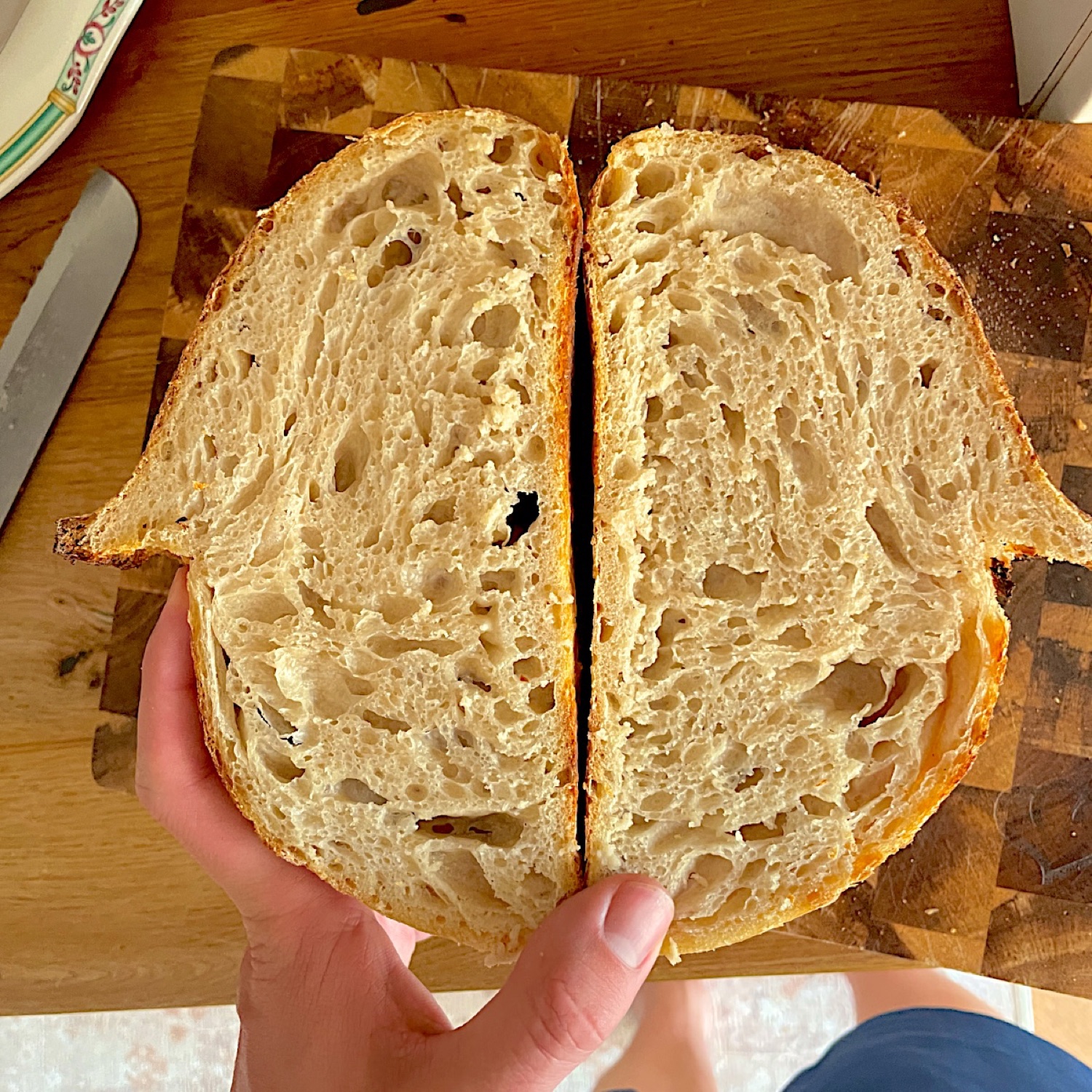
At some point, the frustration turned into fascination. Then the fascination became a fairly serious obsession. I talked about sourdough constantly, made it an unnecessary part of my personality, and went very far down the rabbit hole.
I am still down there, actually, and to be honest I am not working very hard to get out of there.
Then came a million questions
Eventually, my colleague, who is also my best friend at work, decided she wanted to start baking sourdough too after listening to me rambling on and on about it for so long. I gave her some of my starter, explained the basics and sent her off with the kind of confidence that only comes after you have already made every possible mistake yourself.
She was enthusiastic and started immediately, which also meant that the questions started immediately.
They were exactly the same kinds of questions I had had in January, except she had one advantage I had not had: someone to text.
So she did. Frequently.
She wanted to know when to feed the starter, whether it looked ready, whether it was supposed to smell like that, how long to leave the dough, whether something was overproofed and, most often, what she was supposed to do next.
I answered everything very patiently, thank you.
Eventually, I had the thought that would later prove to be dangerously optimistic: I could quickly build a small app that walked her through the process so she would not have to remember everything.
The word “quickly” did quite a lot of work in that sentence.
The app I wished I had
The original idea was simple. I wanted to make something that could tell you what to do next and roughly when to do it. So that’s what I did and after a good week’s work my first prototype was ready.
The more I worked on it, though, the more obvious it became that sourdough does not really behave like a checklist. A starter changes depending on how you feed it. Kitchen temperature changes the timing of almost everything. One loaf gives you information that should influence the next one, and sometimes the most useful thing is simply knowing that the strange thing happening in your jar is probably normal.
So the app grew along with my understanding of what beginners actually need.
It became a place to keep track of your starter, estimate when it might be ready, guide you through a bake, remember what happened last time and help you work out what to change next.
In other words, it gradually became the app I had wanted in January, before I knew enough to explain what I was missing.
Why the jar has opinions
There was one thing I knew quite early on: I did not want Sourdough Diary to feel like a spreadsheet with timers attached. Sourdough has far too much personality for that. And frankly so do I.
A starter is alive, inconsistent and occasionally dramatic. It has good days, strange smells, unexpected growth spurts and very firm opinions about room temperature. Once you have looked after one for long enough, it becomes almost impossible not to assign it a personality, and most certainly a name.
So the starter in the app ended up having one too.
That is where the little messages, the character and eventually the more playful features came from. The app still needed to be genuinely useful, but I wanted it to feel warm and human rather than clinical.
The same thinking led to the family tree. Giving someone a piece of your starter is one of the nicest parts of sourdough, because that tiny mixture of flour and water can move from kitchen to kitchen, picking up new names and stories along the way.
I wanted the app to remember that too.
From Breadniss to Sourdough Diary
Sourdough Diary started because I was bad at making sourdough.
Then, very gradually, I became less bad at it. After that, someone else started asking me all the questions I had once been asking myself, and somewhere between answering those questions and thinking I could “quickly” build an app, the project became something much bigger. The goal, however, has always stayed simple.
I want sourdough to feel less confusing.
I want you to know when your starter is ready, what you should do next, roughly how long things might take and what you could change if the last loaf did not turn out the way you hoped.